

Fresh Sweet Corn Processing Industry Status and Trends 2026
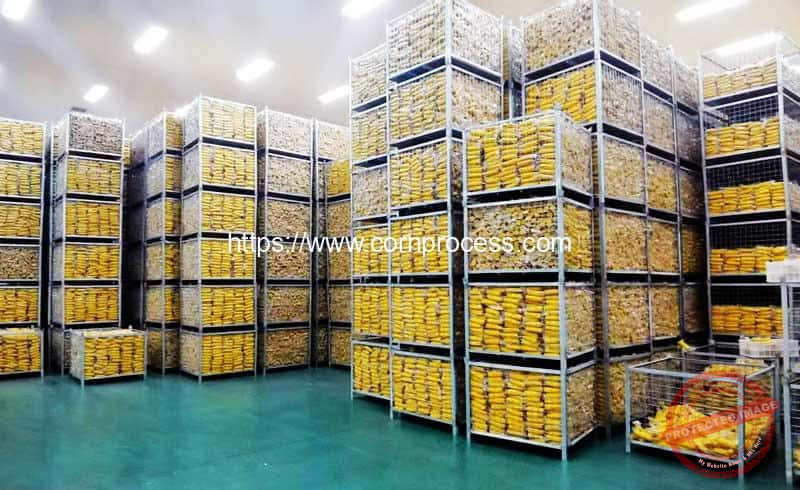
Abstract:By comprehensively analyzing market size,production capacity,processing technologies,and processing equipment development status for fresh corn,status and future trends of fresh corn processing industry were summarized.Results indicated that market
demand for fresh corn in China has been growing steadily,characterized by diversified consumption methods and multi-faceted consumption scenarios.Currently,companies face shortcomings such as insufficient independent integration capabilities for production lines,inadequate core technology and equipment research and development capabilities. In response to technical challenges existing in processing process, recommendations were proposed to focus on process optimization, strengthening core equipment
research and development, and improving complete production lines construction, to promote industry upgrades and sustainable
development.
Keywords:fresh corn,processing industry,process research,equipment development
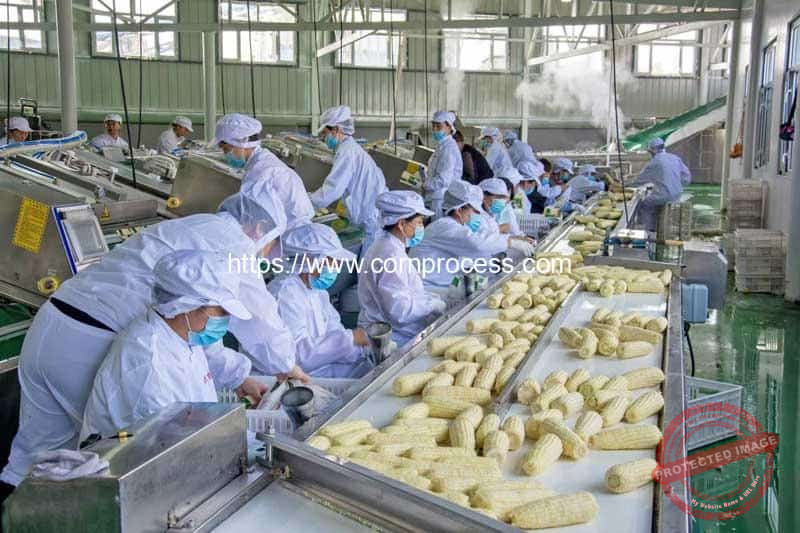
Fresh corn, also known as sweet corn, refers to corn varieties harvested during the milk stage. Its ears or kernels can be eaten directly or further processed. It mainly includes sweet corn, glutinous corn, sweet glutinous corn and baby corn. Its soluble sugar or amylopectin content must meet specific standards, thus it has unique quality and nutritional value. In the context of the diversified development of the contemporary food industry, fresh corn occupies an important position. With the improvement of residents’ living standards and the change of dietary concepts, fresh corn, because it is rich in dietary fiber, vitamins, minerals and a variety of bioactive substances, has become a food that is both delicious and healthy. It can be used as a snack food or as a substitute for a nutritious staple food [1]. The “2022 Fresh Corn Consumption Trend White Paper” shows that fresh corn has developed rapidly with an annual compound growth rate of 13.46%, and has become a representative product that promotes the staple food status of corn. The development of the fresh corn processing industry is of key significance to meeting the diversified market demand. On the one hand, modern consumers have a growing demand for convenient, delicious and nutritious food. Processed fresh corn products can better adapt to the fast-paced lifestyle and meet the needs of different scenarios such as family consumption, catering industry and industrial processing. On the other hand, the development of this industry helps to promote the upgrading of enterprise processing equipment and process innovation, and improve the overall processing level. In-depth understanding of market demand and competitive landscape will help enterprises to accurately position products, clarify R&D direction and optimize marketing strategies, thereby promoting the transformation of the industry towards high efficiency and sustainability [2]. This study systematically analyzes the current status of my country’s fresh corn processing industry from the aspects of market size, production capacity, processing technology and processing equipment development, and puts forward relevant suggestions for the future development of the fresh corn processing industry on this basis.
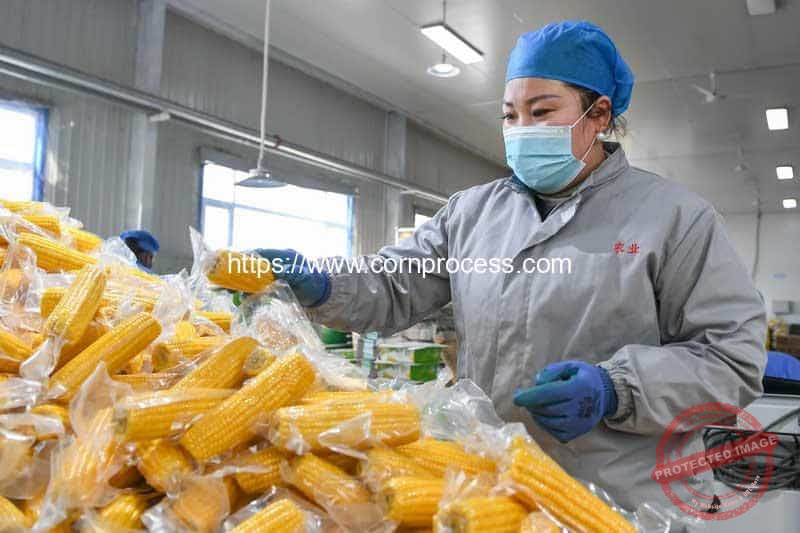
1 Industry Status
1.1 Raw Material Supply
1.1.1 Planting Scale and Distribution
With the continuous improvement of the living standards of urban residents in my country, the demand for fresh corn has grown rapidly, and the market scope has gradually expanded from first-tier cities to the whole country. The increase in demand has driven the rapid increase in the planting area of fresh corn, making China the world’s largest producer of fresh corn. In 2022, the total planting area of fresh corn in my country exceeded 1.666 million hm2, which is 12 times larger than in 2003, ranking first in the world[3]. Fresh corn is widely distributed in my country, mainly concentrated in the three northeastern provinces, Beijing-Tianjin-Hebei region, Jiangsu, Zhejiang and Shanghai, Gansu Province, Sichuan Province, Chongqing Municipality, Guizhou Province, Yunnan Province, Guangdong Province, Hubei Province and Anhui Province. Based on natural conditions and cultivation habits, China can be divided into 7 major planting areas: the Northeast quick-freezing and processing planting area, the Beijing-Tianjin-Hebei quick-freezing and processing and fresh-eating mixed planting area, the Jiangsu-Zhejiang-Shanghai high-quality fresh-eating corn planting area, the Hubei and Anhui early-spring market planting area, the Guangdong-Guangxi-Fujian fresh-eating corn multi-season planting area, the Southwest fresh-eating corn planting area, and the Hainan and Yunnan off-season planting area. Among them, the cumulative planting area of Yunnan, Guangdong, Jilin, Heilongjiang and Jiangsu provinces accounts for 53.6%. The global planting area of sweet corn is about 1.34 million hm2, mainly distributed in the United States, France, Hungary, Spain, Canada, Thailand and Brazil[4]. The United States is the world’s largest producer and consumer of sweet corn, with a planting area of about 330,000 hm2. Thailand’s sweet corn planting area is about 118,000 hm2, with an annual output of 1.48 million tons and an annual export volume of more than 200,000 tons. The demand for fresh corn in Europe is growing rapidly. France, as the main producer of sweet corn in Europe, accounts for 85% of the total sweet corn production in Europe, and its frozen product market share is as high as 70%[5].
1.1.2 Yield and quality characteristics of different varieties of fresh corn
Currently, there are more than 56 nationally approved varieties of fresh corn in my country. The main varieties include sweet corn, glutinous corn, sweet glutinous corn, and baby corn. Glutinous corn accounts for more than 50% of the planting area. Representative varieties include Jingke Nuo 2000 and Wan Nuo 2000, which have a soft and glutinous taste[6]. Sweet glutinous corn is mainly composed of Nongke Yu 368, Nongke Nuo 336, Caitian Nuo 6, and Tiangui Nuo 932, which have a sweet and glutinous taste. Sweet corn is mainly composed of Mige, Jinguan 218, Jingke Tian 608, and Jinzhong Yu, which have a high sweetness[4, 7-8]. Sweet corn is the main type of fresh corn in foreign countries. According to data from the U.S. Department of Agriculture website, sweet corn accounted for 75% of the processing in the United States in 2021, with a processing output of about 2.2 million tons. The main processed products are frozen ears, frozen corn kernels, and canned sweet corn. The annual processing output value is basically stable at 500 million to 600 million US dollars, ranking second among processed vegetables in the United States. Many of the world’s well-known seed companies are from the United States, such as DuPont, Monsanto, and Dow Chemical, which have a great influence in various countries around the world. Currently, more than 500 hybrid sweet corn varieties have been promoted and applied [9].
1.1.3 Issues of seasonality and stability of raw material supply
The supply of fresh corn in my country has significant seasonal characteristics, and the supply seasons vary significantly in different production areas. In Yunnan Province, cities like Mangshi and Ruili can achieve off-season production in winter and spring, supplying fresh corn year-round, thanks to their favorable climate. Guangdong and Hainan provinces concentrate their fresh corn supply in the first half of the year. Traditional major producing areas such as the three northeastern provinces and the Beijing-Tianjin-Hebei region are limited by climate and cultivation cycles, primarily supplying in summer and autumn, forming seasonal peaks. Although my country’s fresh corn planting area is widespread, supply stability is challenged by the growth cycle and extreme weather. To address this, my country is gradually improving production stability by promoting new varieties, optimizing cultivation methods, and strengthening the application of agricultural technology. Furthermore, the widespread adoption of quick-freezing technology further extends the fresh corn market supply cycle, meeting the needs of different seasons and consumption scenarios.
Overseas, fresh corn is mainly grown as sweet corn, and supply varies significantly by region in terms of seasonality and stability, making the matching of supply chain construction with consumer demand crucial for industry development. The United States, with its highly mechanized agricultural system and extensive planting areas, has a relatively stable sweet corn supply. In European countries like France and Spain, sweet corn supplies are mainly concentrated in the summer and autumn seasons due to climatic conditions. Thailand, with its tropical climate, has a longer fresh corn supply cycle, but this is primarily concentrated in specific months. These countries are extending the market supply period and gradually alleviating seasonal supply constraints by improving modern processing technologies (such as freezing and canning), optimizing supply chains, and cold chain storage methods.
1.2 Types of Processed Products and Market Performance
1.2.1 Types of Processed Products
Processed fresh corn products mainly include quick-frozen fresh corn, vacuum-packed fresh corn, and canned corn kernels.
Quick-frozen fresh corn refers to fresh corn that, after harvesting, undergoes pre-treatment such as washing, screening, and steaming (or blanching), is rapidly frozen to below −18 °C, and then transferred to a −18 °C cold storage facility. This process preserves the original flavor, moisture, and nutrients of the corn to the greatest extent possible, resulting in a taste close to fresh corn. Quick-frozen fresh corn has a long shelf life, up to 12 months or more, making it suitable for storage and transportation, and meeting the off-season supply demand[10]. Vacuum-packed fresh corn refers to fresh corn that has been cleaned, blanched, and then vacuum-sealed and sterilized, effectively extending its shelf life while preserving its freshness, taste, and nutritional components. Compared with ordinary packaged corn, vacuum-packed fresh corn is not only easier to carry and store, but also attracts consumers due to its visible appearance and quality[10]. Canned corn kernels are products made by removing the kernels from fresh corn, cleaning, pre-cooking, canning, adding broth (sugar water, salt water, etc.), and then expelling air, sealing, and sterilizing. Canned packaging has good sealing and storage properties, making it suitable for room temperature storage. In addition to being convenient to carry and eat, canned corn kernels have a variety of flavors and can be widely used as a raw material and ingredient for various foods[11]. 1.2.2 Market size and consumption trend According to the analysis of processing entities, there are 501 sweet corn processing related enterprises, mainly concentrated in Heilongjiang Province, Gansu Province, Guangdong Province and other places; there are 234 glutinous corn processing enterprises, mainly in Heilongjiang Province, Jilin Province and Hebei Province. According to the market consumption analysis, the sales of fresh corn e-commerce in my country continued to grow, reaching RMB 272.122 billion in 2023, an increase of 4.83% year-on-year. In developed countries such as the Americas and Europe, fresh sweet corn is regarded as a vegetable crop. In countries along the “Belt and Road” such as Vietnam, Myanmar, Laos and Kazakhstan, frozen sweet corn kernels and canned products are very popular[12]. According to the United Nations Commodity Trade Statistics Database in 2023, the main producing countries of sweet corn are the United States, France, Hungary, China and Thailand, and the main consuming countries are the United Kingdom, Germany, Russia, South Korea and Japan[9]. In international trade, my country’s exports of fresh sweet corn far exceed its imports, resulting in a significant trade surplus in the international market. Imports are mainly “frozen sweet corn” from the United States, while exports are primarily to countries like Germany.
1.2.3 Major Enterprises
Currently, domestic fresh sweet corn producers include specialized enterprises focusing on processing fresh sweet corn and diversified enterprises also involved in other frozen vegetable industries, such as Jilin Nongsao Food Co., Ltd., Heilongjiang Dadong Black Soil Agriculture Co., Ltd., October Rice Field Group, Heilongjiang North Latitude 47 Green Organic Food Co., Ltd., Heilongjiang Zhongrui Green Fruit and Vegetable Industry Co., Ltd., and Zhangjiakou Tianqin Agricultural Trade Co., Ltd. In summary, fresh sweet corn processing products are diverse, perform well in the market, and the division of labor among enterprises is gradually becoming clearer, laying the foundation for the healthy development of the industry.
2 Current Technological Status
2.1 Pre-processing Technology
Fresh sweet corn needs to be harvested during the optimal picking period to ensure quality.
Because of vigorous respiration after harvest, fresh corn is prone to water loss and rapid quality decline due to microbial proliferation. Therefore, fresh corn should be transported to processing enterprises as soon as possible after harvest to shorten transit time and maximize its freshness and nutritional value [13]. Fresh corn first needs to be peeled and the silks removed to reduce mechanical damage to the kernels. Then, the corn is cut with a head and tail cutter to ensure uniform length for subsequent processing. Then, the surface impurities of the corn are removed by high-pressure water jet cleaning, and then deep cleaning is carried out using high-pressure spray and bubble water technology of a drum-type high-pressure jet cleaning equipment to effectively improve the cleanliness of the corn. 2.2 Processing process and quality control 2.2.1 Blanching Blanching is a key step in the processing of fresh corn, which is intended to carry out sterilization and heat treatment before refrigeration. Corn is usually soaked in water at 65-100 °C for 10-15 minutes to inactivate enzyme activity, reduce nutrient loss, and maintain its original color, texture, and flavor [14]. The temperature and time of the heat treatment process are crucial to ensure that enzyme activity is inhibited while minimizing nutrient loss and moisture loss [15]. Circulating cold water or air-cooling systems are usually used to quickly cool the blanched fresh corn to avoid overcooking and further nutrient loss. 2.2.2 Vacuum Packaging and High-Temperature Sterilization Vacuum packaging is an important means of extending the shelf life and maintaining the freshness of fresh corn. The blanched corn is placed in a vacuum packaging bag, vacuumed, and sealed [16]. This process can effectively isolate oxygen and microorganisms, effectively maintain its original flavor and texture, and extend the shelf life. High-temperature sterilization further improves product safety and quality stability [17]. 2.2.3 Quick-freezing processing Quick-freezing processing refers to the direct freezing of fresh ears of corn after spraying and replenishing water, or rapid freezing after steaming and partially cooking, with the core temperature rapidly reduced to below −18 °C and the freezing time not exceeding 30 min, effectively locking in nutrients and flavor, and extending shelf life. The small ice crystals formed by the quick-freezing technology reduce tissue damage, reduce juice loss after thawing, and better restore the color and texture of the corn [18-19]. 2.3 Quality control measures during processing Quality control runs through the entire process of fresh corn processing. From raw material harvesting to finished product delivery, each step needs to be strictly monitored. Fresh corn is harvested at the seven-tenths maturity stage, when the sweetness, taste and nutrition are at their best. At the same time, it is ensured that the entire process from harvesting to packaging does not exceed 6 hours, so as to maximize the preservation of nutritional components and sensory quality [20]. During processing, key indicators such as corn freshness and pest and disease status are comprehensively tested, along with key parameters such as moisture and soluble sugars, to ensure processing stability and consistency. Products must pass multiple quality tests, including sensory evaluation and microbiological testing, to meet food safety and quality standards. Furthermore, enterprises can grade products based on their amylose, soluble sugar, fat, and protein content to ensure stable and uniform quality for each batch [21-22].
3. Current Equipment Status
Fresh corn processing equipment includes peeling machines, corn washing machines, corn cooking machines, corn cooling machines, quick-freezing machines, packaging machines, and cold storage facilities.
my country’s fresh corn processing equipment industry has reached a certain scale.
3.1 Peeling Machines
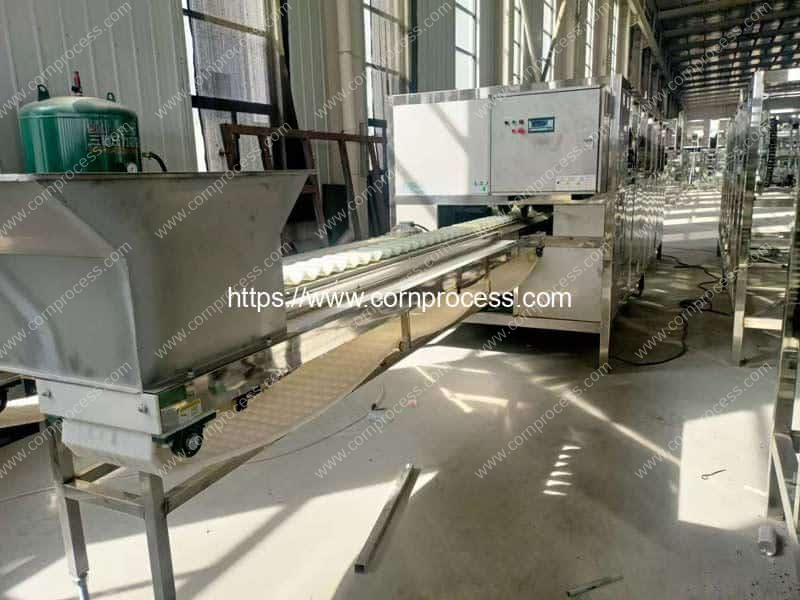
Peeling machines are the primary equipment in fresh corn processing, responsible for removing the corn husk and silks. Common types of peeling machines include roller-type, chain-type, and air-blowing peeling machines. Roller peelers separate husks through friction and compression, achieving high peeling efficiency (approximately 1500 kg/h), but are prone to damaging the corn. Chain peelers use a chain pulling method, resulting in less damage and higher integrity, but have lower peeling efficiency (approximately 600 kg/h) and are more difficult to clean [23-24].
Air-blowing peelers, as shown in Figure 1, use high-pressure airflow to blow husks away from the corn cob, achieving highly efficient peeling (approximately 3500 kg/h) with less damage to the corn cob, but generate more noise during operation.
3.2 Cleaning Machine
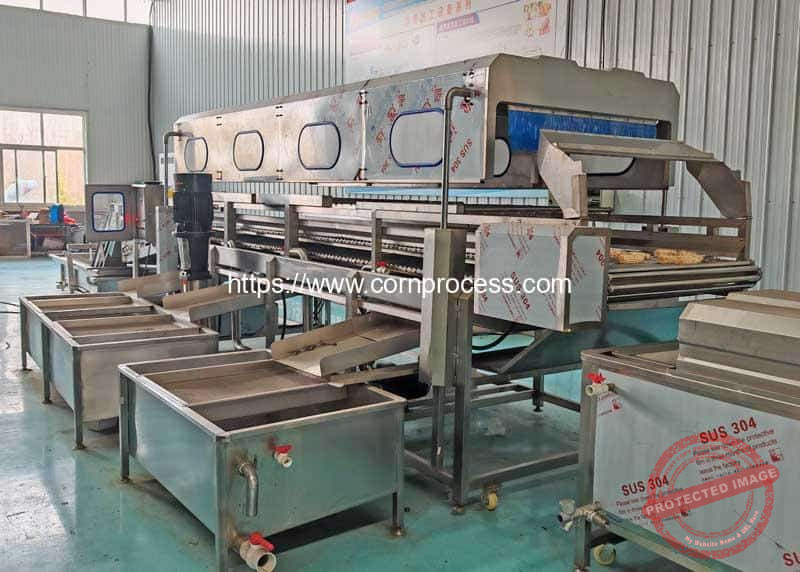
The cleaning machine is responsible for removing impurities from the surface of corn. Common methods include spraying, brushing, and bubble cleaning. Spraying cleansing removes surface impurities through high-pressure water flow. It is efficient and does not damage the corn, making it suitable for pre-treatment.
Brushing cleansing uses rotating brushes to scrub the surface of the corn cob. It is efficient and has strong cleaning ability, but it is prone to mechanical damage, so it is rarely used [25].
Bubble cleaning uses an air pump to generate a large number of bubbles in the cleaning tank, which pushes the corn to tumble and is combined with water flow to clean the surface of the corn. It has less damage to the corn and is suitable for more delicate cleaning operations. The fresh corn bubble cleaning machine is shown in Figure 2.
Fig. 2 Fresh corn bubble cleaning machine
3.3 Cooking Machine

The cooking machine mainly heats the corn with steam or hot water [26]. The steaming process requires strict control of temperature, time and steam pressure. For example, sweet corn is usually steamed at 100 °C for 8 to 15 minutes, and glutinous corn is steamed for 10 to 20 minutes. Modern steaming machines integrate automated and precise temperature control systems to ensure standardized steaming and processing, promote standardized processing of fresh corn, and ensure stable and consistent product quality. The steamer for fresh corn is shown in Figure 3. 3.4 Quick-freezing machine Quick-freezing machine is an important piece of equipment for extending the shelf life of fresh corn. It uses rapid freezing technology to reduce the core temperature of corn to below −18 °C. At present, fluidized bed tunnel quick-freezing equipment is widely used in fresh corn production lines. The open temperature of this equipment is maintained at −40 to −30 °C, the cold air flow rate is 2 to 8 m/s, and the corn cob freezing time is <30 min[27]. Fluidized bed quick-freezing systems not only effectively reduce corn freezing time but also prevent ice crystals from damaging the corn tissue. After thawing, corn juice loss is minimal, better preserving the original color and flavor.
4. Existing Problems
4.1 Severe Differentiation Among Production Enterprises
my country’s fresh corn processing enterprises are unevenly distributed, exhibiting a polarized pattern: small and micro enterprises account for over 90%, with outdated technology and equipment, limited financial strength, and difficulty in achieving standardized production; large-scale enterprises with technological and financial advantages are few in number, resulting in a low overall market share and an inability to fully meet domestic and international market demands. This imbalance in industrial layout directly restricts the coordinated development of the industry and the improvement of market competitiveness.
4.2 Incomplete Complete Sets of Equipment
The mechanization level of complete sets of equipment for fresh corn processing is low in processes such as peeling, sorting, and packaging. The development of key processing technologies and equipment is relatively slow, resulting in high labor intensity and difficulty in guaranteeing product quality. The domestic market lacks domestically produced complete production lines with mature technology, stable performance, and reasonable prices in the medium-to-high yield range. This limitation increases cost pressure on small and medium-sized frozen corn processing enterprises, hindering the sustainable development of the fresh corn processing industry.
4.3 Lagging Development of Core Technologies and Equipment
Enterprises have insufficient investment in the research and development of key equipment required for fresh corn processing, such as high-efficiency peeling machines, intelligent cleaning equipment, precision cooking systems, and high-efficiency quick-freezing equipment. This increases production costs and limits the improvement of processing technology. Furthermore, some equipment lags significantly behind international advanced levels in terms of operational stability, energy conservation, environmental protection, and automation.
4.4 Low level of standardization and industrialization
The standardization of the fresh corn processing industry is insufficient, and there is a lack of a unified quality testing and control system, resulting in a lack of consistency between production processes and product quality. The cooperation between upstream and downstream of the industrial chain is not close, and an efficient integrated industrial model from raw material supply, processing and production to terminal sales has not yet been formed[28]. 5 Product development trend 5.1 Strengthen process innovation and product research and development The fresh corn industry has developed into a comprehensive industrial chain covering scientific research, planting, processing, logistics, marketing and service. Fresh corn products are rich in variety, including vacuum waxy corn, vacuum sweet corn, corn cans and quick-frozen corn[29]. In response to the problems of fresh corn’s poor storage and transportation after harvest and rapid deterioration in quality, enterprises are developing high-value-added products such as microwave fresh corn, fresh-locked corn, and fresh-preserved corn to improve corn processing technology [30]. These innovative products can extend the shelf life of products, improve consumer convenience, and are expected to promote the continuous expansion of the fresh corn market. 5.2 Promote the research and development of core equipment In order to improve production efficiency and product quality, we should increase the research and development efforts of key processing equipment, such as high-efficiency peeling machines, intelligent cleaning equipment, precise temperature control cooking systems, and energy-saving quick-freezing equipment. By optimizing the processing technology, we can improve the level of automation and help the industry develop towards high efficiency and modernization. 5.3 Improve the layout of complete sets of equipment and production lines Innovate the research and development plans for small and medium-sized production equipment with a capacity of 3 to 5 t/h and medium and high production equipment with a capacity of 15 t/h or more, and provide small and medium-sized enterprises with stable performance and moderate price equipment solutions to meet the diversified needs of enterprises of different sizes. By filling market gaps, we can promote the tiered development of enterprises and improve the structural layout of the fresh corn industry chain. 5.4 Promoting Green and Intelligent Development
With increasing consumer awareness of food safety and environmental protection, the fresh corn processing industry needs to actively promote technological innovation in areas such as energy conservation, emission reduction, and resource recycling. Introducing intelligent manufacturing technology can achieve refined management of the production process and build a sustainable, modern fresh corn processing system.
6. Conclusion
Fresh corn, due to its unique nutritional value and good taste, has become an important part of the modern food industry. This study systematically analyzes the current status and existing problems of the fresh corn processing industry, pointing out that the industry’s development faces multiple constraints, including imbalances in enterprise scale, equipment deficiencies, and lagging technological research and development. In the future, green and intelligent development should be promoted by strengthening process research, increasing investment in key equipment R&D, and building a standardized production system.
Through the coordinated development of technology, market, and the industrial chain, my country’s fresh corn processing industry can move towards internationalization and modernization, injecting new impetus into agricultural industrial upgrading and food industry development.
Company Profile
Romiter Machinery Co., Ltd. is a market-leading designer and manufacturer of corn processing machines. Romiter Machinery wins a wide reputation for high-quality machines with high efficiency, excellent reliability, easy maintenance, long lifespan and an excellent technical support team.
Now, Our factory can provide corn washing cleaning machines, corn dehusking machines, corn threader machines, corn cutting machines, popcorn making machines, kettle corn making machine, corn flakes making machines, steam flaked corn production line, corn packing machine, vacuum packed fresh corn production line, frozen sween corn kernel production line. corn flour milling machine, and corn grits milling machine
Romiter Group can provide customized machine for customers. Welcome to contact us for more information.


